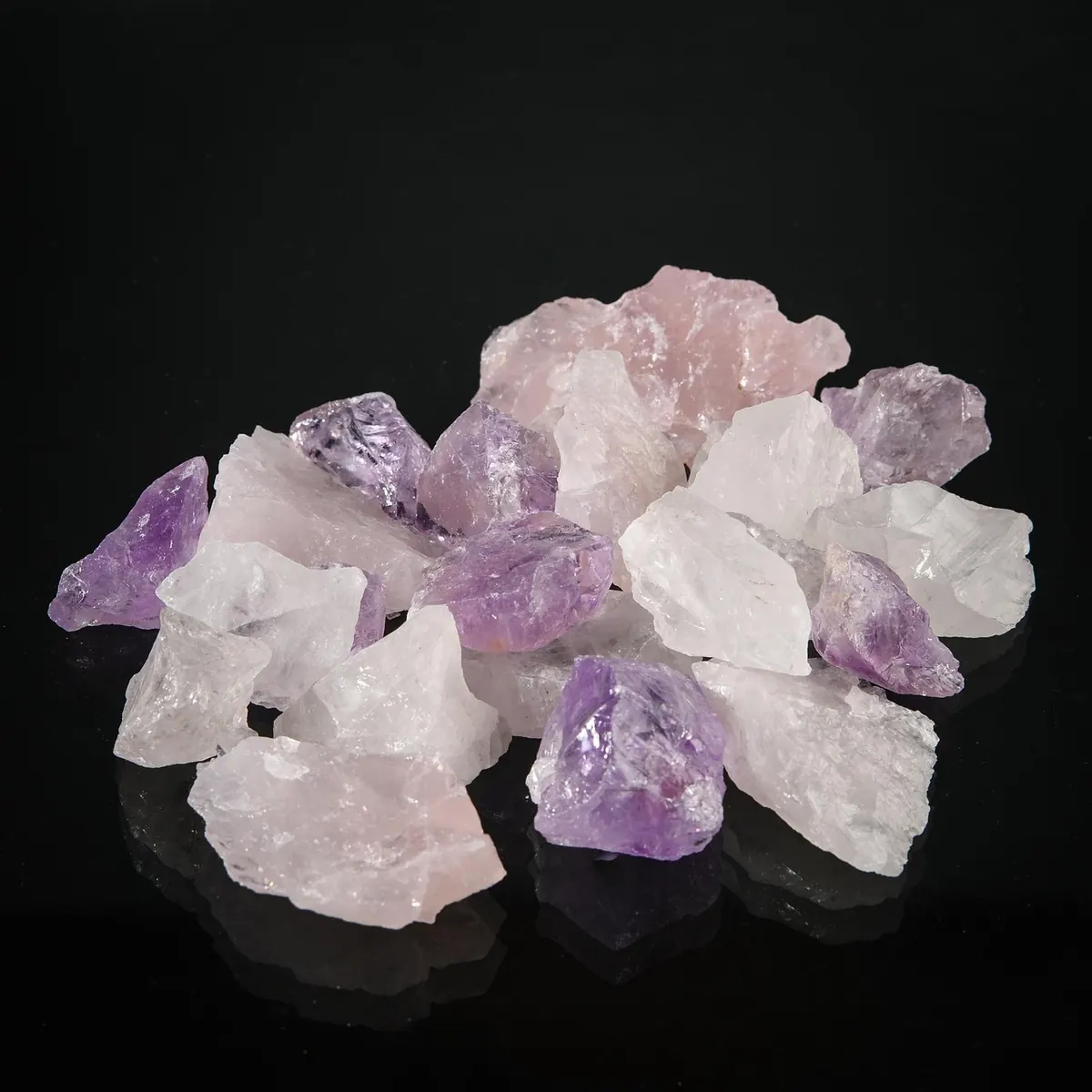
Amethyst vs Rose Quartz: Key Differences in Raw and Polished Stones
Two stones sit side by side on a shop shelf, both quartz, both attractive, and a first-time buyer asks the obvious question: which is which? Amethyst and rose quartz share the same chemistry and the same hardness, yet they are rarely confused once you know what to look at. The color comes from different impurities, the crystals grow in different habits, and a lapidary treats them differently on the wheel. The confusion usually appears in a bin of tumbled stones, a strand of beads, or a tray of rough specimens where labels are small and lighting is flattering. Here is how to separate them with a loupe, a lamp, and a little patience.
Color: Glassy Violet vs. Milky Pink
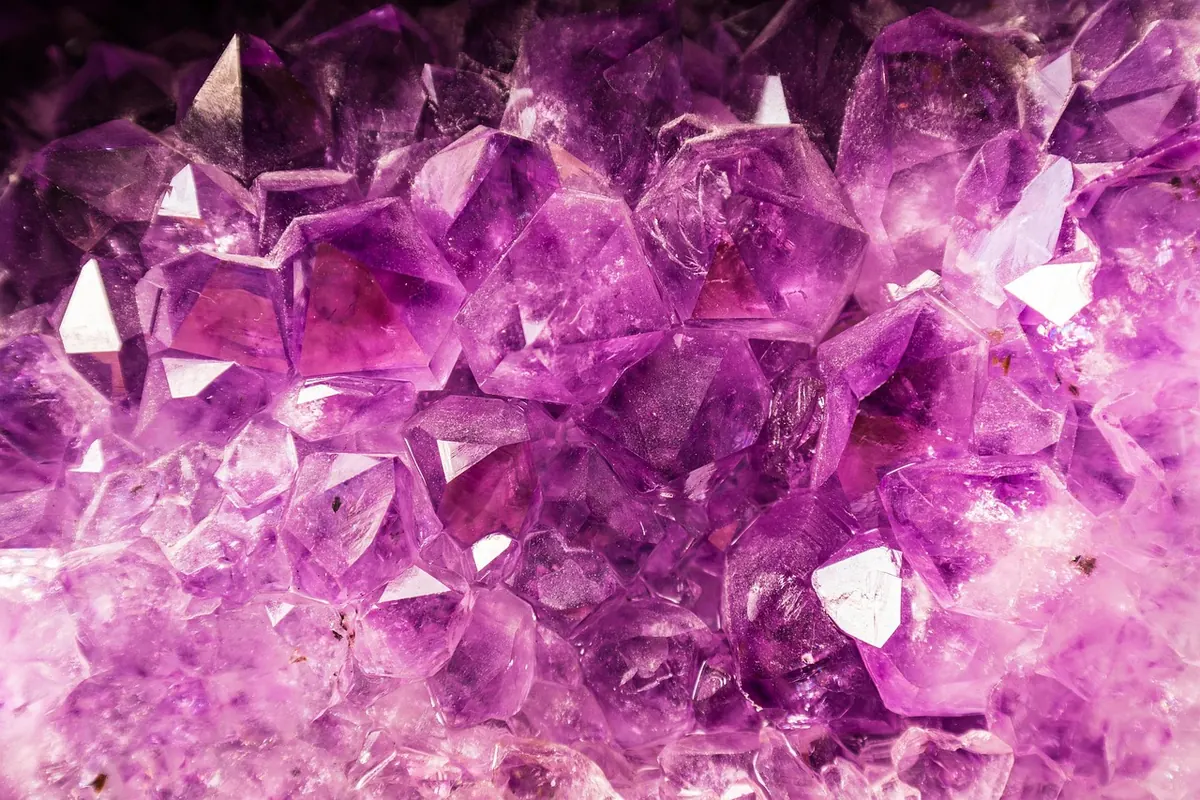
Amethyst gets its purple from iron impurities combined with natural irradiation in the ground, and the color is almost never even. Good specimens show zoning: bands of deeper violet, pale lilac edges, sometimes a smoky or reddish cast. Slice a geode and you may see chevron banding. In daylight, a faceted amethyst can look almost like glass, with a clear core and darker tips. Under warm incandescent light it may appear slightly redder or more violet, while cool daylight can make the same stone look crisper and bluer. That shift is not a test by itself, but it explains why a stone bought indoors can look different at home.
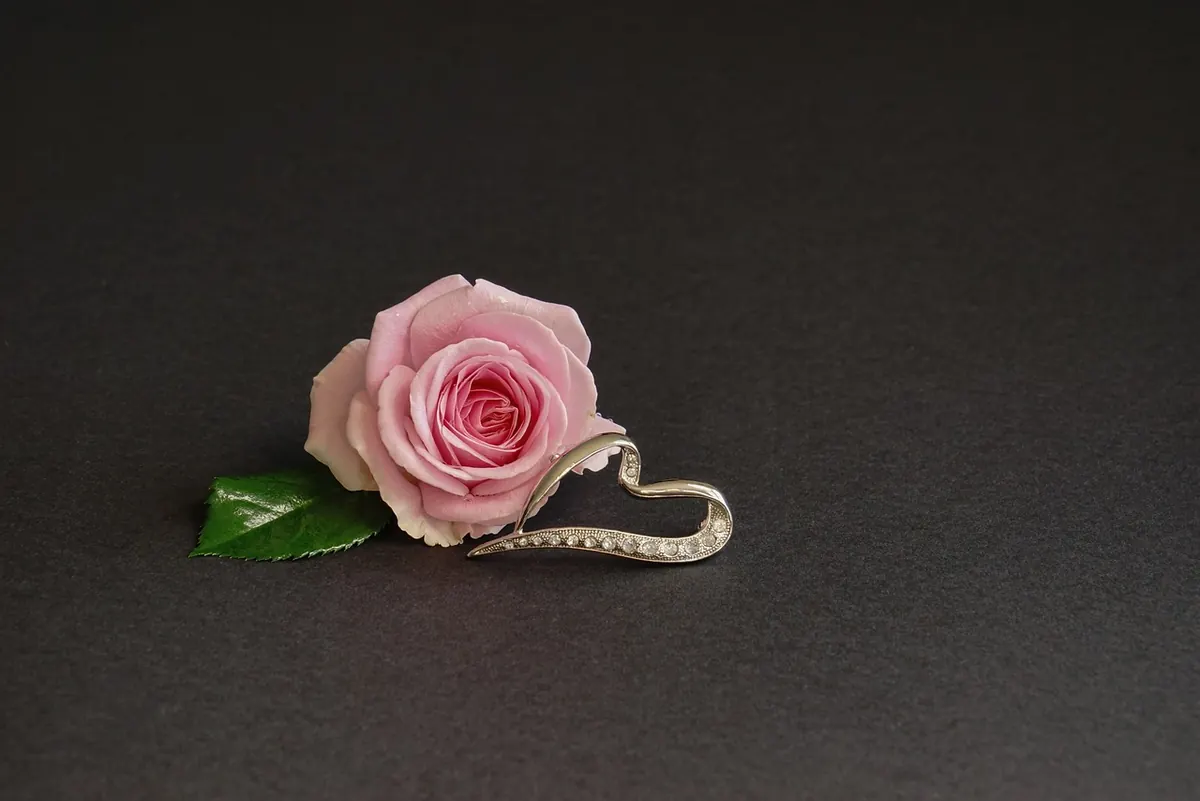
Rose quartz is pink from tiny amounts of titanium and iron, often alongside microscopic fibrous inclusions that give it a cloudy, milky look. Where amethyst is usually transparent and cool-toned, rose quartz tends toward translucent pink — sometimes grayish, sometimes so pale it reads white in a photograph. Deep, saturated rose quartz exists, but a candy-pink stone at a low price deserves a second look; it may be dyed. As a rule: uneven violet with visible banding points to amethyst, even but hazy pink points to rose quartz. A strong loupe helps here, because natural rose quartz usually has a soft, cloud-like interior rather than the crisp transparency of good amethyst.
Hardness and Wear: The Same Number, Different Weak Points
Both are 7 on the Mohs scale. A steel knife blade, around 5.5, won't scratch either one, and a fingernail is useless as a test. It also means the two will scratch each other, and both pick up damage from topaz, sapphire, or a diamond ring dropped in the same drawer. Hardness is not the same as toughness, though, and that is where the two stones part ways in daily wear.
Quartz has no cleavage; it breaks with a curved, shell-like fracture. In practice: amethyst chips at the point and along thin edges, so a terminated crystal knocked off a shelf usually loses its tip first. Rose quartz is massive and often full of internal fractures, so it can craze under a drop or a sharp temperature change. A rose quartz bead bracelet that looks flawless in the shop may already contain fine internal cracks that are invisible until the stone is wet or held against a light.
Warm water and a drop of mild soap suit both. Skip the ultrasonic cleaner on heavily fractured rose quartz and on any dyed stone. Some amethyst fades after long exposure to strong direct sun, so a windowsill is not the kindness it looks like. Store both away from harder jewelry, and give faceted amethyst its own soft pouch rather than letting it rattle against metal clasps.
What That Means for Jewelry
Amethyst works well in pendants, earrings, and occasional-wear rings, but a high, pointed crown is vulnerable to knocks. Rose quartz is more often cut as a cabochon or carved into beads because its translucency and cloudiness are part of its charm; a bezel setting protects the soft-looking surface better than open prongs. Neither stone is a good choice for a ring worn during heavy yard work, but both are perfectly serviceable in jewelry that is worn with a little care.
Raw Stones: Crystal Faces vs. Lumpy Mass
Raw amethyst looks like a mineral. You see flat, glassy crystal faces, growth lines, a pointed termination, and often a gray or white matrix where it grew. Druzy amethyst is a crust of tiny sparkling points inside a geode. Light reflects off flat planes rather than a soft sheen. A raw amethyst point usually shows color concentrated near the tip and paler quartz toward the base, and the sides may carry faint horizontal growth lines that catch the light.
Raw rose quartz looks like a rock. It forms massive lumps with no crystal faces at all — rounded, waxy, opaque-to-translucent chunks, often with a greasy shine and curved fracture surfaces. Terminated rose quartz crystals do occur, but they are uncommon enough that a vendor selling "natural rose quartz points" is usually selling carved or polished shapes made from massive rough, or mislabeling another pink stone. Raw rose quartz is more likely to be sold by weight in irregular chunks, and its color tends to be more uniform through the piece than amethyst's banded violet.
Polished Stones: Facets, Cabochons, and Surface Clues
Amethyst is often faceted because transparent rough rewards a cut. Sharp facet junctions, crisp reflections, and visible internal color zoning are typical. A large, clean, deeply colored faceted amethyst is uncommon and priced accordingly; a very large stone with perfect clarity and a suspiciously low price may be glass, synthetic quartz, or a treated material. In polished slices and freeforms, amethyst still shows its banding and its glassy surface.
Rose quartz is usually cut en cabochon, tumbled, carved, or drilled into beads because its translucency to opacity does not reward faceting in the same way. Its polish looks softer and waxier, and a good cabochon may show a star under a single point light — star rose quartz is a prized variety. Dyed rose quartz often has color concentrated in cracks and fractures, while natural color sits more evenly in the hazy body of the stone. On beads, look at the drill holes: dye and polishing residue often collect there.
Inclusions and Internal Structure
With a loupe, amethyst often reveals growth lines, color zoning, and occasional inclusions such as rutile needles, hematite flecks, or smoky patches. Its relative transparency makes those features easier to see. Rose quartz is defined by dense, fine fibrous inclusions that create its cloudy appearance; these are usually too small to identify individually, but they give the stone its characteristic milky glow. Tiny fractures are common in both, but in rose quartz they are more likely to be part of the stone's overall texture.
How to Tell Them Apart at a Glance
- Color pattern: Amethyst is uneven violet with bands or smoky zones; rose quartz is a hazier, more even pink.
- Transparency: Amethyst is often transparent and glassy; rose quartz is usually translucent to opaque and milky.
- Raw shape: Amethyst shows crystal faces and terminations; rose quartz appears as rounded massive lumps.
- Surface: Amethyst reflects off flat planes; rose quartz has a waxy or greasy sheen.
- Cut: Faceted stones are more likely amethyst; cabochons and beads are more likely rose quartz, though both can be cut either way.
- Internal look: Amethyst may show crisp zoning; rose quartz usually looks clouded by fine fibers.
Buying Wisely: Raw Lots, Beads, and Points
In raw lots, amethyst is often priced by color depth, termination quality, matrix, and size. Rose quartz is priced more by weight, translucency, and the presence of a star. Ask whether a stone is dyed, heated, or otherwise treated, and check the return policy before buying an expensive piece. Compare stones in daylight rather than under shop LEDs, and use a loupe on any strand of beads or carved point that seems too saturated for its price. Honest labeling is the best test of all.
Care and Display
Keep amethyst out of prolonged direct sun and store it separately from harder stones. Clean rose quartz with mild soap and water, dry it gently, and avoid ultrasonic cleaners on fractured or dyed pieces. Display both away from heat and sharp knocks, and handle raw crystal points by the base rather than the tip.
Final Test: Loupe, Lamp, and Patience
If the stone is raw, look for crystal faces and violet zoning before you look at the label. If it is polished, compare the transparency and the color pattern: glassy and banded points toward amethyst, hazy and milky points toward rose quartz. Both are quartz, both take a fine polish, and both can be beautiful. The differences are in habit and haze, not hardness — and a little patience with a loupe will settle the question faster than any scratch test.
Photo: maxknoxvill / Pixabay