Italy hands over its minerals the way it hands over its food: regionally, with strong opinions, and largely by word of mouth. Alpine valleys in the north give up quartz, fluorite and pegmatite treasures; Tuscany has its pyrite and the iron hills of Elba; Sardinia carries centuries of mining and the minerals that came with it. What surprises beginners is not the absence of a scene but how quietly it is advertised — a poster in a sports hall, a line in a club newsletter, a date you hear about three weeks too late. Here is how to find the rooms, museums and shops worth your time, and how to behave once you are inside them.
Start with a fair, not a shop
If you have one free Saturday and a beginner's budget, spend it at a mostra mercato or borsa di scambio rather than a boutique. The first is a commercial fair with dealers; the second is a swap meet where collectors trade and sell from folding tables. Most Italian events are a hybrid: rows of professional dealers, a room of club members, a table of somebody's late uncle's collection. You will see more material in an hour than in a month of shop visits, and prices run from a few euros for a thumbnail to four figures for a museum-grade piece.
The Bologna Mineral Show, held in spring on the outskirts of the city, is the one to put in the diary first: large, well established and easy to reach. Beyond that, fairs appear and reappear in Turin, Milan, Rome, Genoa, Trentino and Sardinia, usually run by local mineralogical clubs. The reliable way to find dates is Rivista Mineralogica Italiana and the notice boards of city clubs — Milan's Gruppo Mineralogico Lombardo is among the best known. Check dates the week before you travel; small fairs move venue and cancel quietly.
What to bring
- A 10x loupe and a small LED torch. Both change what you can actually see.
- A rigid box with bubble wrap, and a padded bag. Fairs sell bags, but not always good ones.
- Cash, plus a card. Many dealers now accept cards; plenty still prefer notes. Ask rather than assume.
- A notebook for locality, price and seller — you will have forgotten by Tuesday.
- Comfortable shoes. Halls are cold and the floors are concrete.
Arrive early on the first morning for the best choice, or late on the last afternoon for the most flexible prices. Both are legitimate strategies; they buy different things.
Museums that teach you what good looks like
Before you spend real money, spend an afternoon looking at specimens that are out of reach.
The natural history museums in Milan, Turin, Florence and Rome all hold historic mineralogy collections, often built from eighteenth- and nineteenth-century donations and still arranged in handsome old cases. University collections — Padua's among them — tend to be smaller and quieter, with labels written for students rather than visitors. Opening hours are the catch: many open only by appointment or a few mornings a week, so check before building a trip around one.
Then go to the mining regions. On Elba, the Museo dei Minerali e dell'Arte Mineraria at Rio Marina sits in the middle of the iron-ore country that produced some of Europe's finest hematite and pyrite, and the island's mining park lets you walk the ground itself. In Tuscany, Massa Marittima's mining museum covers the same territory from underground. In the Dolomites, the geological museum at Predazzo explains the volcanic and sedimentary history behind local specimens. At Baveno, on Lake Maggiore, the granite museum covers the quarrying that made the town's name among pegmatite collectors. Sardinia's Museo del Carbone at Carbonia is an industrial museum rather than a mineral display, but it explains the mining culture behind so many of the island's specimens.
Look at how the best labels are written: species, precise locality, sometimes the finder and the year. That is the standard to expect from a dealer.
Buying from shops and dealers
Italy has good mineral shops and it has shops selling dyed agate and mislabelled quartz. The difference is rarely the décor.
A serious dealer labels locality, not just species, and will tell you which part of a specimen has been repaired, glued or stabilised. They let you look without hovering, and they say "I don't know" when they don't. Ask directly — "È stato riparato?" — and listen to the answer. Repairs are normal and legitimate in the trade; concealment is not.
Be sceptical of a specimen sold with a vague origin when the species normally comes from somewhere specific, and of prices dramatically lower than everything comparable in the room. Keep receipts for anything expensive, especially if you may resell or insure it. If a purchase is a serious amount of money for you, it is entirely reasonable to ask an experienced collector or an appraiser before committing.
Etiquette at the table
Italian dealers are generally warm and unhurried, and they respond badly to being rushed or handled roughly. The rules are simple.
- Ask before touching. "Posso?" with a gesture toward the piece is enough.
- Lift one specimen at a time, by the matrix, over the tray it came from — never over concrete.
- Never tap two specimens together. It is the fastest way to turn a purchase into an argument.
- Ask about locality and treatment before you ask about price.
- Haggling is acceptable, especially on several pieces and late in the fair. Ask once, politely: "Fate uno sconto?" If the answer is no, buy or walk away with good grace.
- Do not haggle hard on a piece you clearly love. Dealers read faces.
- Say thank you even when you buy nothing. This is a small world and the next fair is next month.
Useful phrases: Posso prenderlo in mano? (may I hold it?) · Da quale località? (from which locality?) · È stato incollato? (has it been glued?) · Quanto costa? (how much?)
If you are buying from outside the EU, ask about export paperwork before you pay, not after. Some materials are restricted, and a reputable dealer will tell you which. For anything with legal or significant financial weight, take proper advice rather than relying on a stallholder's summary.
Collecting in the field, carefully
Italy is not a country where you can wander onto a hillside with a hammer. Rules differ by region and by site, protected areas and parks generally prohibit collecting, and many classic localities sit on private land or are worked out. Ask the landowner, check the regional regulations, and never assume an old quarry is open ground. Fossils and archaeological material are a separate and much more heavily protected matter; if you are unsure, leave it where it is and ask. Photography and note-taking are always welcome. Hammering is not.
A practical checklist for your first trip
Pick one fair and one museum within reach rather than trying to cover the country. Confirm museum hours by phone or email, check the fair's dates a week ahead, and set a cash budget you are willing to spend on the day — it is easier to enjoy a fair once the number is decided. Buy one good small specimen rather than five mediocre ones; a well-labelled thumbnail with a precise locality will teach you more. Keep the label with the piece, always, in the same box. And talk to people: Italian collectors are generous with local knowledge once they see genuine interest, and the person at the next table may be the one who tells you about the small autumn swap meet nobody advertises.
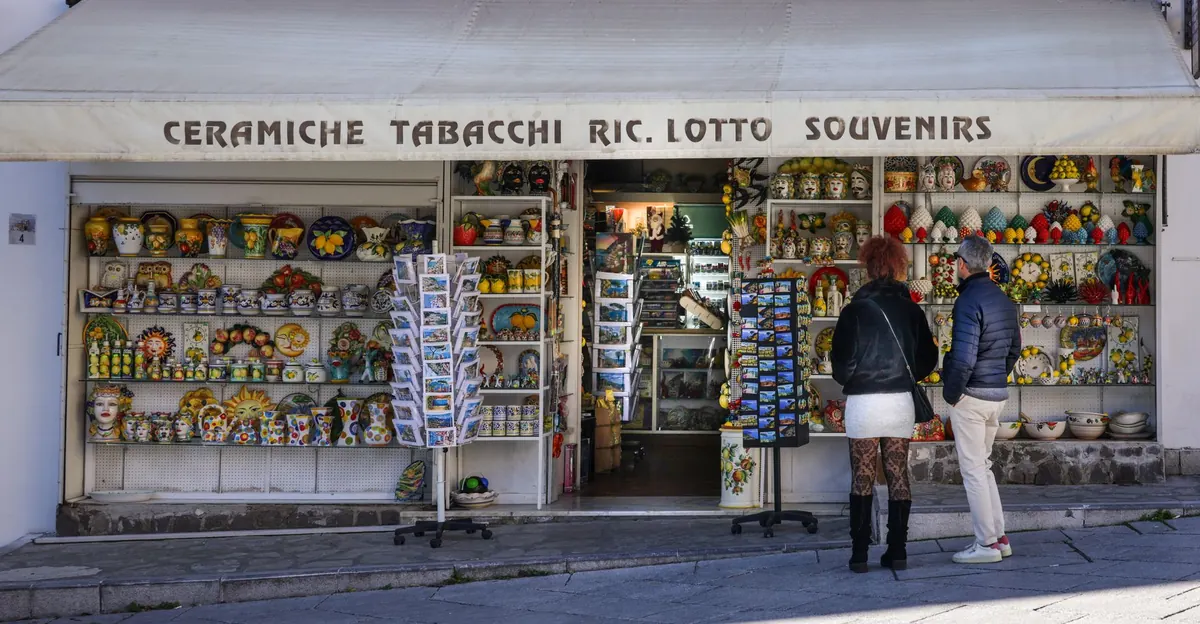
Photo: Magda Ehlers / Pexels